

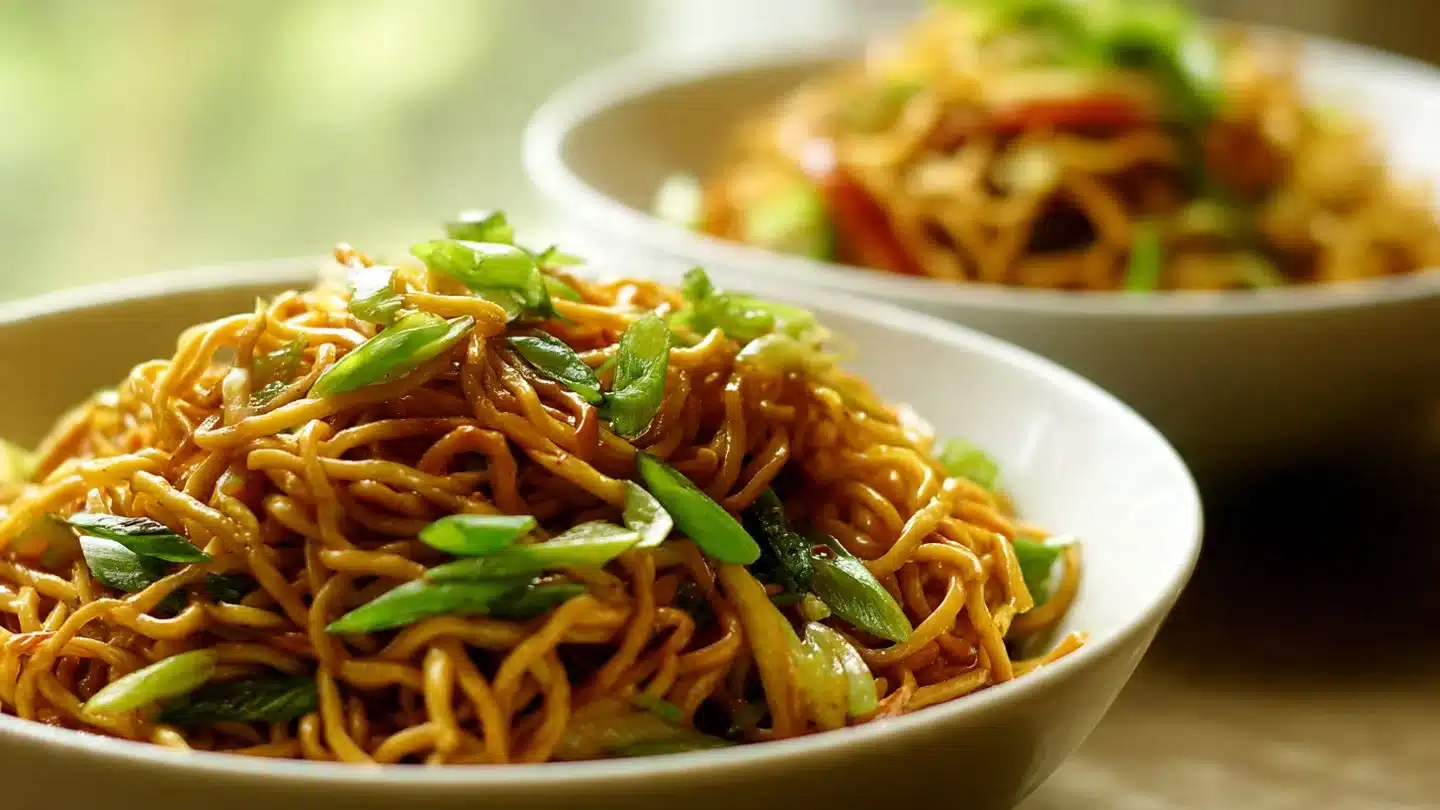
You know that craving when you want something crunchy, savory, and utterly comforting in under 20 minutes? I get that. I first fell for Classic Chinese Fried Noodles on a rainy evening when I refused to wait for delivery, and honestly, I haven’t looked back. If you want a no-fuss, reliable stir-fry that hits all the right notes—crisp edges, tender veggies, and that punch of soy—this recipe will become your go-to.
I’ll walk you through the star ingredient (chow mein noodles, duh), show you simple steps that actually work, and give pro tips so your noodles never go soggy. Also, if you love mixing things up, you’ll appreciate my quick links to other tasty ideas like a lighter salad that I pair with this sometimes: a Chinese-inspired chicken salad I adore.
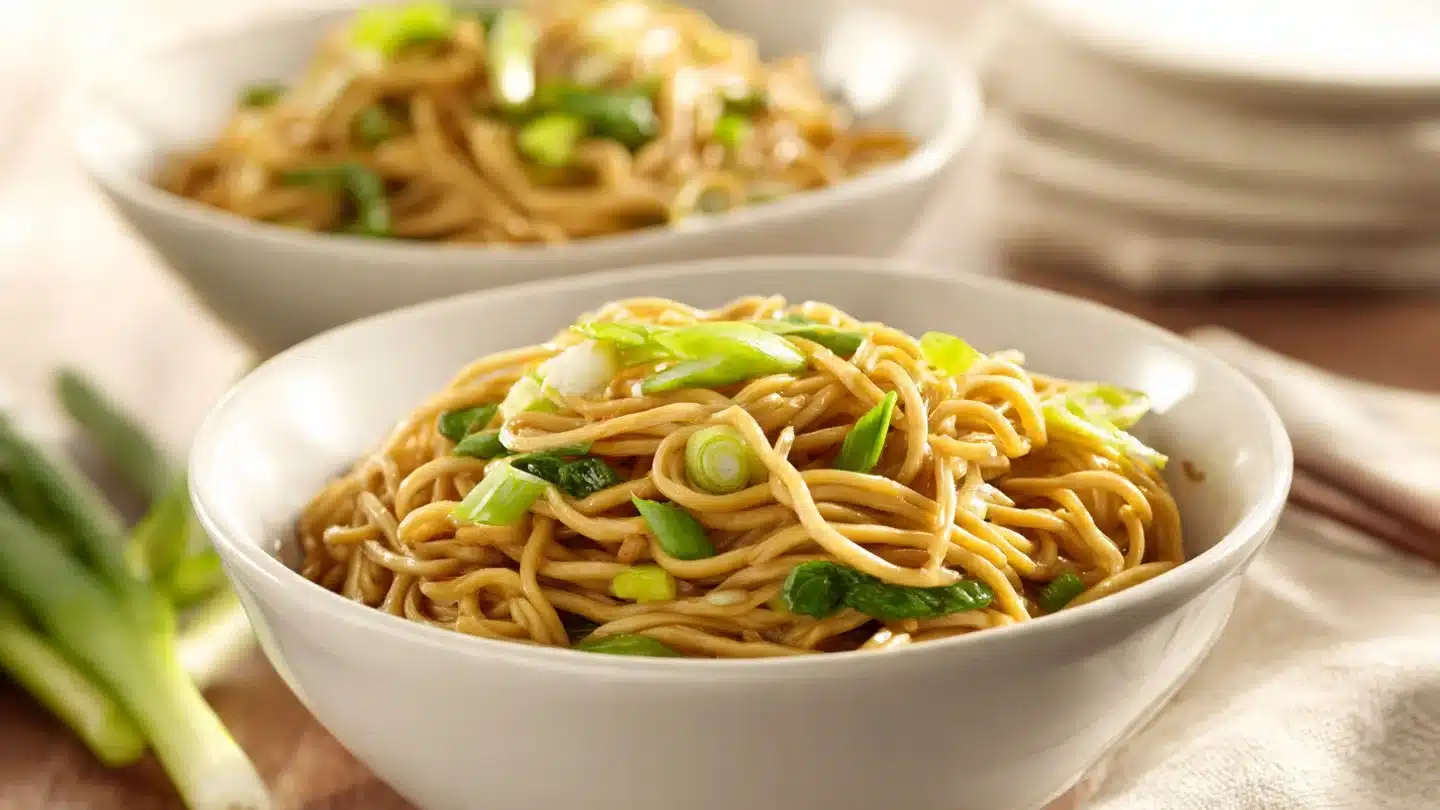
Why You’ll Love This Recipe
- Quick and satisfying: You finish this pan in about 15–20 minutes.
- Minimal ingredients: You use pantry staples and a few fresh veggies.
- Customizable: You swap proteins and veg with zero drama.
- Crispy edges: You get that golden texture without deep-frying.
- Family-friendly: Kids and picky eaters usually approve.
Ingredients You’ll Need
- 2 cups chow mein noodles
- 1 cup mixed vegetables (bell peppers, carrots, and snow peas)
- 2 tablespoons soy sauce
- 1 tablespoon garlic, minced
- 1 tablespoon ginger, minced
- 2 tablespoons vegetable oil
- Salt and pepper to taste
- Green onions for garnish (optional)
Ingredient and Method must appear in a didacted part.
How to Make (Step-by-Step)
STEP 1
Cook the chow mein noodles according to package instructions and set them aside. Rinse with cold water if the package suggests it, and toss lightly with a drop of oil to prevent sticking.
STEP 2
In a large skillet or wok, heat the vegetable oil over medium-high heat. You want the oil hot enough to shimmer but not smoke.
STEP 3
Add the garlic and ginger, and stir-fry for about 30 seconds until fragrant. I always watch closely; burnt garlic ruins the whole vibe.
STEP 4
Add the mixed vegetables and stir-fry for 2–3 minutes until they start to become tender. Keep the crunch—overcooked veg makes the dish boring.
STEP 5
Add the cooked noodles and soy sauce, and toss everything together. Use tongs or two large spatulas to lift and turn so you coat everything evenly.
STEP 6
Stir-fry for an additional 2-3 minutes until everything is heated through. Press the noodles lightly against the pan for a few seconds to get crisp edges.
STEP 7
Season with salt and pepper to taste. Remember that soy sauce adds salt, so taste before adding extra.
STEP 8
Serve hot, garnished with green onions if desired. I throw a few chili flakes on mine sometimes because I like living dangerously.
Pro Tips for the Best Results
- Use a hot pan: A screaming-hot wok gives you better sear and crunch.
- Don’t overcrowd: Cook in batches if you need to avoid steaming the noodles.
- Dry your noodles: Excess water causes soggy texture; pat or air-dry after boiling.
- Add oil in stages: A little oil at the start and a splash when you add noodles improves browning.
- Soy sauce control: Start with the listed amount; add more gradually so you don’t oversalt.
- Prep everything first: Stir-frying moves fast, so chop and measure before you heat the pan.
- Protein options: Thinly sliced chicken, shrimp, or tofu work great—cook them first and set aside.
Fun Variations & Topping Ideas
Variations:
- Swap chow mein noodles for egg noodles or thin rice noodles for a different texture.
- Add a splash of oyster sauce or hoisin for a deeper flavor.
- Toss in leftover roast pork or sliced beef for a heartier version.
- Make it vegetarian by using tofu and adding mushrooms for umami.
Toppings:
- Toasted sesame seeds for a nutty finish.
- Crispy shallots or garlic chips for extra crunch.
- Chopped cilantro or basil for a fresh herbal note.
- A squeeze of lime brightens the whole dish—trust me.
Storing and Reheating
- Refrigerate leftover noodles in an airtight container within two hours of cooking. They last 3–4 days in the fridge.
- Reheat on the stovetop over medium heat with a splash of oil or water. Toss constantly to restore texture.
- Avoid microwaving unless you want limp noodles; if you must, add a splash of water and heat in short bursts while stirring.
- Freeze for up to one month, but expect some texture loss. I usually freeze only if I plan to use the noodles in a soup later.
Leftover ideas
- Turn leftovers into a quick stir-fried noodle bowl by adding a fried egg and a drizzle of sesame oil.
- Use cold leftover noodles as a base for a noodle salad with a tangy dressing.
- Toss leftovers into a soup to make a comforting noodle broth.
- If you want a cozy pairing, try serving the noodles alongside a creamy side like sweet potato chowder for an interesting contrast—yeah, that combo sounds weird, but it works surprisingly well.
Frequently Asked Questions (FAQ)
What’s the difference between chow mein and lo mein?
Chow mein usually gets crisped in the pan for a slightly crunchy texture, while lo mein stays soft because you toss the noodles with sauce off heat. I prefer chow mein when I want texture, IMO.
Can I use dried vegetables instead of fresh?
You can, but fresh veg give better crunch and color. Use frozen if that’s what you have; thaw and drain excess water first.
How do I prevent noodles from sticking together?
Rinse boiled noodles under cold water and toss with a small amount of oil. Also, don’t let them sit in the pot too long.
Can I make this gluten-free?
Yes—use gluten-free soy sauce or tamari and ensure your chow mein-style noodles are gluten-free (rice noodles work). FYI, texture will vary.
What protein cooks best for this recipe?
Thin, uniform slices cook fastest. Chicken breasts or thighs, shrimp, and tofu all work. Cook them first and rest them while you stir-fry the veg so everything finishes together.
Conclusion
You’ll love this Classic Chinese Fried Noodles recipe because it delivers crunch, flavor, and speed without drama. I keep it in my quick weeknight rotation and tweak it depending on what’s in the fridge. Try it once, and I bet it becomes a comforting habit.
If you tried the recipe, leave a comment and a rating—I want to hear how you made it yours. Happy frying, and don’t forget to experiment a little (and tell me if you added something wild).
Classic Chinese Fried Noodles
Ingredients
Main Ingredients
- 2 cups chow mein noodles Use fresh or dried, depending on availability.
- 1 cup mixed vegetables (bell peppers, carrots, and snow peas) Feel free to substitute with your favorite mixed vegetables.
- 2 tablespoons soy sauce Adjust to taste.
- 1 tablespoon garlic, minced Freshly minced for the best flavor.
- 1 tablespoon ginger, minced Freshly minced for enhanced taste.
- 2 tablespoons vegetable oil For stir-frying the noodles and vegetables.
- to taste salt and pepper Adjust based on personal preference.
- for garnish green onions Optional, for serving.
Instructions
Cooking the Noodles
- Cook the chow mein noodles according to package instructions and set them aside. Rinse with cold water if the package suggests it, and toss lightly with a drop of oil to prevent sticking.
Stir-Frying
- In a large skillet or wok, heat the vegetable oil over medium-high heat. You want the oil hot enough to shimmer but not smoke.
- Add the garlic and ginger, and stir-fry for about 30 seconds until fragrant. Watch closely; burnt garlic ruins the dish.
- Add the mixed vegetables and stir-fry for 2–3 minutes until they start to become tender. Keep the crunch; overcooked veg makes the dish boring.
- Add the cooked noodles and soy sauce, and toss everything together. Use tongs or two large spatulas to lift and turn so you coat everything evenly.
- Stir-fry for an additional 2-3 minutes until everything is heated through. Press the noodles lightly against the pan for a few seconds to achieve crispy edges.
- Season with salt and pepper to taste. Remember that soy sauce adds salt, so taste before adding extra.
- Serve hot, garnished with green onions if desired.